

電子報內容



國際合作發展的新啟發 ──貿易援助(Aid for Trade)研討會系列報導
|
|
|

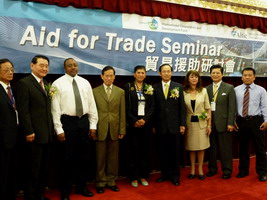
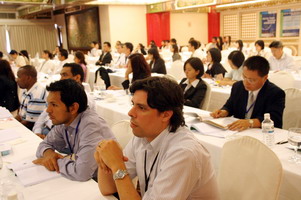
編按:貿易援助(Aid for Trade)議題在2006年WTO總理事會倡議以來,已受到多方矚目;運用貿易援助來促使開發中或低度開發國家提升貿易能力,使這些國家可以融入多邊貿易體系並享受貿易自由化的便捷對經濟發展之成效,受到國際主要捐助國以及多邊開發機構的重視。為向國人介紹貿易援助作為國際合作計畫的世界趨勢,國合會在8月20日於台北圓山大飯店舉辦「貿易援助研討會」 (Aid for Trade Seminar),邀請Agency of International Trade and Information Cooperation(AITIC)執行長都蘭博士(Dr. Esperanza Duran)、國合會李副秘書長栢浡及亞太商工總會江執行長偉平、中華經濟研究院徐副研究員遵慈等人,分別從援助的調和性與協調性(Harmonization and Alignment)、公私部門合作(Public and Private Partnership)以及主導權(Ownership)等面向探討貿易援助的相關議題。研討會由外交部歐鴻鍊部長、國合會陳連軍秘書長進行開幕致詞。經濟部常務次長謝發達亦蒞臨發表專題演講。
|
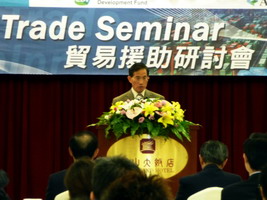
外交部歐鴻鍊部長開幕致詞
Opening Ceremony Remarks by Francisco H. L. Ou, Minister of Foreign Affairs
Permanent Secretary Hon. Leo Titus Preville, Ministry of Trade, Industry, Commerce, Consumer Affairs and Investment, St. Lucia,
Executive Director Dr. Esperanza Duran, Agency for International Trade Information and Cooperation (AITIC),
Vice Minister Fadah Hsieh, Ministry of Economic Affairs,
Ambassador Lien-gene Chen, International Cooperation and Development Fund,
Distinguished guests,
Ladies and gentlemen:
It is my great pleasure to participate in this morning's opening ceremony. On behalf of the Ministry of Foreign Affairs and the seminar organizer, the International Cooperation and Development Fund (TaiwanICDF), I would like to extend a warm welcome to all of you who have traverled great distances to participate in this seminar, Aid for Trade.
|
We have with us today a number of prominent policy-makers who have worked toward the goal of reaching consensus in the development community. Thus, firstly I would like to say how much we value and appreciate your coming to Taiwan. I want to use this opportunity to demonstrate to you how Taiwan connects international cooperation and development with Aid for Trade, thereby fulfilling its commitments to the international community.
In the 1950s, Taiwan adopted a series of economic reforms, and in the 1960s launched an export expansion policy. In 1963, Taiwan's industrial production share of GDP surpassed that of agriculture. Furthermore, Taiwan established the first Export Processing Zone in Kaohsiung in 1966, which was the first of its kind in Asia, and has expanded Taiwan's capacity for exporting to international markets. Owing to these endeavors, Taiwan has achieved an annual trade surplus since 1971. In recent decades, Taiwan has sustained this trend, and is now the world's 17th largest country in terms of trade.
However, newly developing countries, particularly those small countries looking to emulate Taiwan's experience, can no longer hope to compete against the industrialization taking place on a massive scale in, say, India, Brazil and China. Despite the unique quality of Taiwan's economic experience, I think it is important to stress that much of the art of policy making, and the knowledge assimilated into Taiwan's culture during this period can still be exploited for the good of its partner countries.
As globalization increases competition and allows resources to move more freely, the goals of multilateral groups can appear to conflict with the trading policies and actions of individual nations. The process has been tough, as we saw during the recent Doha Round in Geneva. And yet, we all acknowledge that developed nations must continue to lead by demonstrating their commitment to harmonization, and that developing nations must continue to demonstrate their commitment to ownership. I want to ensure you that the Taiwan government is fully committed to pursuing ongoing, multilateral engagement.
As Chairman of the TaiwanICDF, I am pleased to say that Aid for Trade is one of the primary angles on how we implement international cooperation and development work. By inviting the private sector to work with us whenever appropriate, we hope to inject the concept of Aid for Trade into our operations. Furthermore, we aim to emphasize this mode of thought in our bilateral and multilateral cooperation. Taiwan and its partners should focus on achieving mutual benefit through trade, and using Aid for Trade to better merge our own economic development experiences into those of the global community.
Aid for Trade intends to produce clear, lasting and meaningful results. Through the seminar today, I hope we can make constructive and positive progress on Aid for Trade issues. Lastly, I would like to wish all of our participants from abroad a productive, pleasant and comfortable stay in Taiwan.
Thank you very much.
|
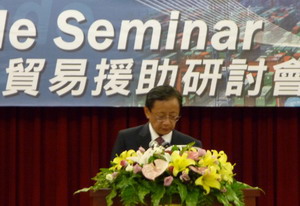
國合會秘書長陳連軍 致詞
Welcoming Remarks by Chen Lien-gene, Secretary General, TaiwanICDF
Your Excellency Minister Ou,
Permanent Secretary Hon. Leo Titus Preville, Ministry of Trade, Industry, Commerce, Consumer Affairs and Investment, St. Lucia,
Honorable Executive Director Dr. Duran,
Honorable Vice Minister Hsieh,
Distinguished speakers and participants, ladies and gentlemen:
It is a great honor for me to have this opportunity to meet so many experts, scholars and officials engaged in the work of Aid for Trade, especially to meet those of you who come from abroad, and took the trouble of long flights to participate in this seminar. Thank you for being with us despite your busy schedules. I would also like to thank our Foreign Minister, His Excellency Minister Ou, for his enlightening opening remarks, as well as lending his kind support to this seminar.
Today we gather here to discuss issues of Aid for Trade. I am sure that the discussions and brainstorms we will have during this seminar will not only open our eyes and broaden our minds in this field, but also bring us closer for further cooperation and action.
His Excellency Minister Ou and I have just returned from a visit to the Republic of Paraguay and the Dominican Republic to attend their respective presidential inaugurations. The delegation was led by our President, His Excellency Dr. Ma Ying-jeou. During this trip, President Ma held discussions with six presidents of Caribbean, Central and South American countries. Among various topics in these meetings and discussions, one of the main concerns was the effectiveness of development cooperation. In the last evening of this trip, and in a meeting with the press in Santo Domingo, in the Dominican Republic, President Ma declared three principles for his policy towards foreign aid.
These principles are...
目的要正當 The purpose must be legitimate
手段要合法 The method must be legal
執行要有效 The assistance must be effective
....and we can all see that Aid for Trade matches with all three of these principles.
Initiated by the WTO's Doha Rounds, and by the OECD's Paris Declaration, Aid for Trade points out a new phase and a new way for international development cooperation. And may I proudly say that the TaiwanICDF began to engage in this type of international operation a long time ago.
After so many years in offering assistance with agriculture, fishing, and animal husbandry, the TaiwanICDF and its technical missions abroad has gradually increased its service to include industrial planning and design, product packaging and shipment, marketing, and so on. Other fine examples include the Papaya Project run in Guatemala, and the Orchid Project in Costa Rica. These projects are designed to help our development partners not only to produce products, but also to sell them to domestic and foreign markets. The TaiwanICDF intends to enlarge, strengthen and accelerate this comprehensive service, and is now increasing the relevant training programs for its staff, as well as the personnel of the countries it serves. I strongly believe that we are taking the correct course.
Ladies and gentlemen, Aid for Trade is a pragmatic and effective approach to international development cooperation, and as you can see regarding Taiwan, the Republic of China and the TaiwanICDF have demonstrated a commitment to this approach. I sincerely wish that we can learn from you, finding ways to further enhance our capability in Aid for Trade through discussions at this seminar. May I offer my best wishes for the success of this seminar.
Last but not least, I do hope that our honorable guests from abroad will have a pleasant stay in Taiwan. Please do your best to discover Taiwan, to enjoy the beautiful scenery of this island, and the extremely warm hospitality of the Taiwanese people.
Thank you very much.
|
- Update: 2022/05/17
- Hits:848