

News



TaiwanICDF 30th Anniversary: Ministers from Three Allied Nations Detail Cooperation Achievements
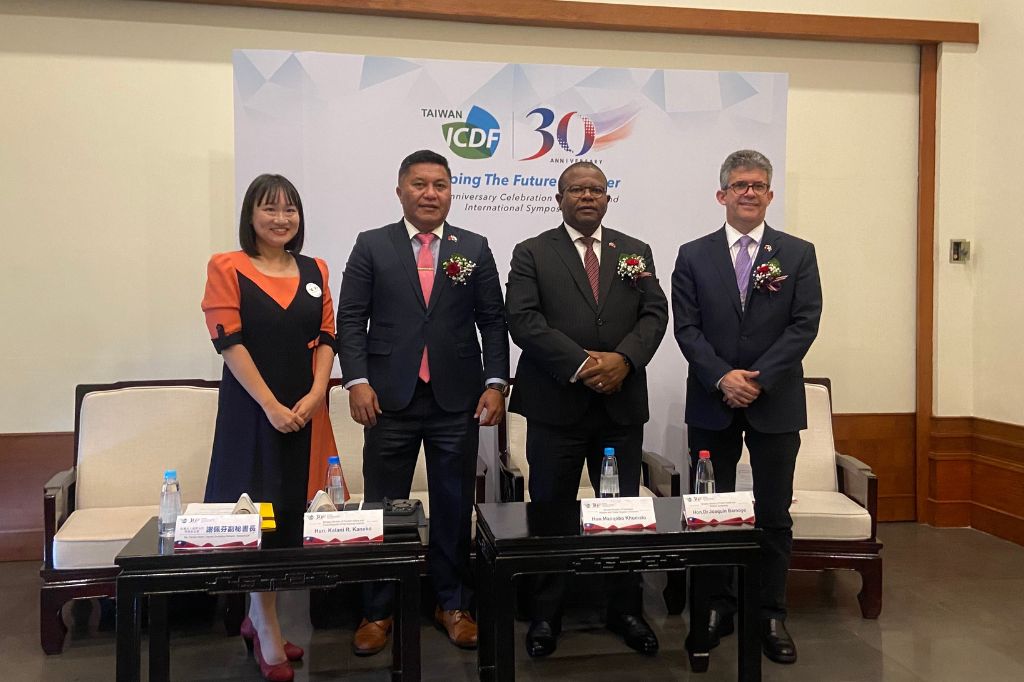
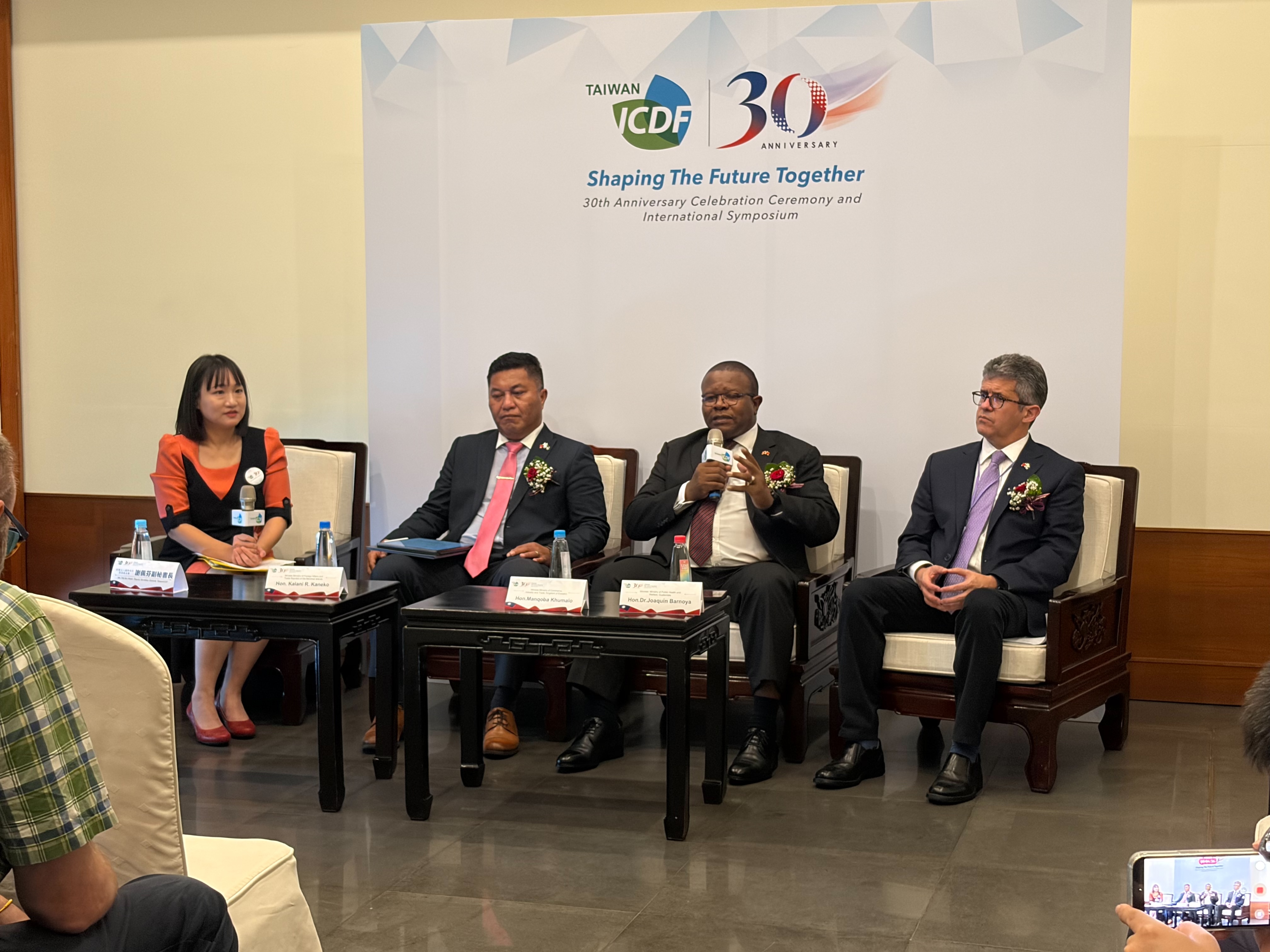
As the International Cooperation and Development Fund (TaiwanICDF) celebrates its 30th anniversary in 2026, heavyweight dignitaries from allied nations gathered in Taiwan to witness this major milestone. During the celebration, Kalani R. Kaneko, Minister of Foreign Affairs and Trade of the Republic of the Marshall Islands; Manqoba Khumalo, Minister of Commerce, Industry and Trade of the Kingdom of Eswatini; and Joaquín Barnoya, Minister of Public Health and Welfare of the Republic of Guatemala, accepted a joint media interview to express their gratitude for TaiwanICDF’s long-standing support in driving public health, women's empowerment, and talent cultivation across their respective countries.
The joint interview was hosted by the TaiwanICDF Deputy Secretary General Peifen Hsieh. The three ministers each shared the cooperation projects that impressed them the most.
Joaquín Barnoya stated that cancer is a major global public health challenge, highlighting the TaiwanICDF’s Project for the Strengthening of Breast Cancer Prevention and Control System in Guatemala as a flagship achievement in advancing cancer care. The project spans early breast cancer screening, diagnosis, and subsequent treatment, comprehensively upgrading healthcare quality in both urban and rural areas. It has not only effectively improved cancer care but also promoted women's health and empowerment. He noted that this collaboration perfectly demonstrates how both sides can work hand-in-hand toward a shared goal to bring tangible changes to people's health.
Manqoba Khumalo, stated that the TaiwanICDF has implemented numerous initiatives in Eswatini covering education and training, agricultural development, women's empowerment, and microfinance. Among these, the Women’s Economic Empowerment and Microfinance Project impressed him the most. He pointed out that the project has successfully helped many women escape poverty and economic vulnerability, allowing them to gradually contribute to the national economy. As the project matures, it has also attracted more young people into the microfinance sector, turning women and youth into a combined pillar of Eswatini's economic growth.
Kalani R. Kaneko, lauded the TaiwanICDF as one of the country's most vital development partners, with deep-rooted collaborations in agriculture, infrastructure, healthcare, and talent cultivation. He was most moved by the results of medical talent cultivation. He noted that during his previous tenure as Health Minister, the Marshall Islands relied heavily on foreign medical personnel. The TaiwanICDF provided scholarships for Marshallese students to study in Taiwan, helping build a local medical workforce. He believes this is not just a true partnership, but a critical milestone for the Marshall Islands' healthcare development.
Looking ahead to the next 30 years, the three ministers also shared their expectations for future cooperation. Minister Barnoya remarked that the ultimate key to deepening cooperation lies in continually building trust and maintaining open communication. He pointed out that Taiwan's national health insurance program successfully covers nearly 99% of its population, serving as a vital model for Guatemala. In the future, digital technology and Artificial Intelligence will become essential tools for improving healthcare. However, technology should not widen the divide; rather, it should bridge the gap in medical resource inequality and bring advanced care to underserved populations.
Minister Khumalo stated that since the establishment of diplomatic ties in 1968, Eswatini and Taiwan have always shared the core values of development, capacity building, and mutual prosperity. Over the past 30 years, the TaiwanICDF has thoroughly understood Eswatini's needs, offering customized assistance aligned with national development goals rather than one-way, pre-packaged solutions. He is confident that over the next 30 years, the TaiwanICDF will continue to help Eswatini upgrade skills, expand markets, and strengthen human resources to jointly build a more resilient economy. Minister Kaneko pointed out that the TaiwanICDF’s greatest strength is that it never adopts a "one-size-fits-all" aid model. Instead, it respects the culture, traditions, and development priorities of each nation, providing assistance based on partners' actual needs, which makes it the Marshallese government's most trusted partner. He also emphasized that in addition to deepening current collaborations, both sides should continue to strengthen people-to-people exchanges to make the bilateral friendship even more robust.
During the interview, the media also focused on the impact of climate change on the Marshall Islands. Minister Kaneko stated that rising sea levels have severely threatened residents' safety and underground freshwater resources. As the Marshall Islands consists of low-lying atolls with an average elevation of only about three meters, climate change is a matter of national survival. He mentioned that the TaiwanICDF has for years assisted in promoting agricultural techniques like greenhouse horticulture and hydroponic cultivation, which not only improve food security but also reduce reliance on food imports, giving people greater confidence to stay and live in their homeland.
Furthermore, the Marshall Islands is marching toward its goal of net-zero emissions by 2050. Minister Kaneko pointed out that the small-scale transition funds provided by the TaiwanICDF offer high flexibility, serving as an important bridge to larger international climate funds, helping the Marshall Islands secure more international resources to drive climate adaptation and infrastructure upgrades. He extended special thanks to the TaiwanICDF for leveraging limited resources to help the Marshall Islands progressively achieve its long-term climate resilience goals.
In response to media inquiries regarding new directions for future cooperation, Peifen Hsieh stated that under the framework of the Ministry of Foreign Affairs' Diplomatic Allies Prosperity Project, the TaiwanICDF is actively promoting two flagship initiatives: Smart Agriculture and Smart Medicine, integrating Taiwan's high-tech advantages into cooperation projects. She noted that in Guatemala, the TaiwanICDF's regional prevention project for Fusarium wilt in bananas utilizes technology from the Taiwan Space Agency (TASA) to assist in agricultural monitoring, while also combining vocational training to cultivate digital talent. In the Marshall Islands, the TaiwanICDF has installed solar power systems at demonstration farms to promote renewable energy applications. Hsieh concluded that the TaiwanICDF will continue to leverage Taiwan’s strengths in technology and smart solutions to meet the most urgent development needs of its partner nations.
Related Pictures
- Update: 2026/07/15
- Hits:907