

News



Foot-and-Mouth Disease Deals a Blow to Swaziland’s Beef Industry; TaiwanICDF Supports Aquaculture as a Key Protein Alternative
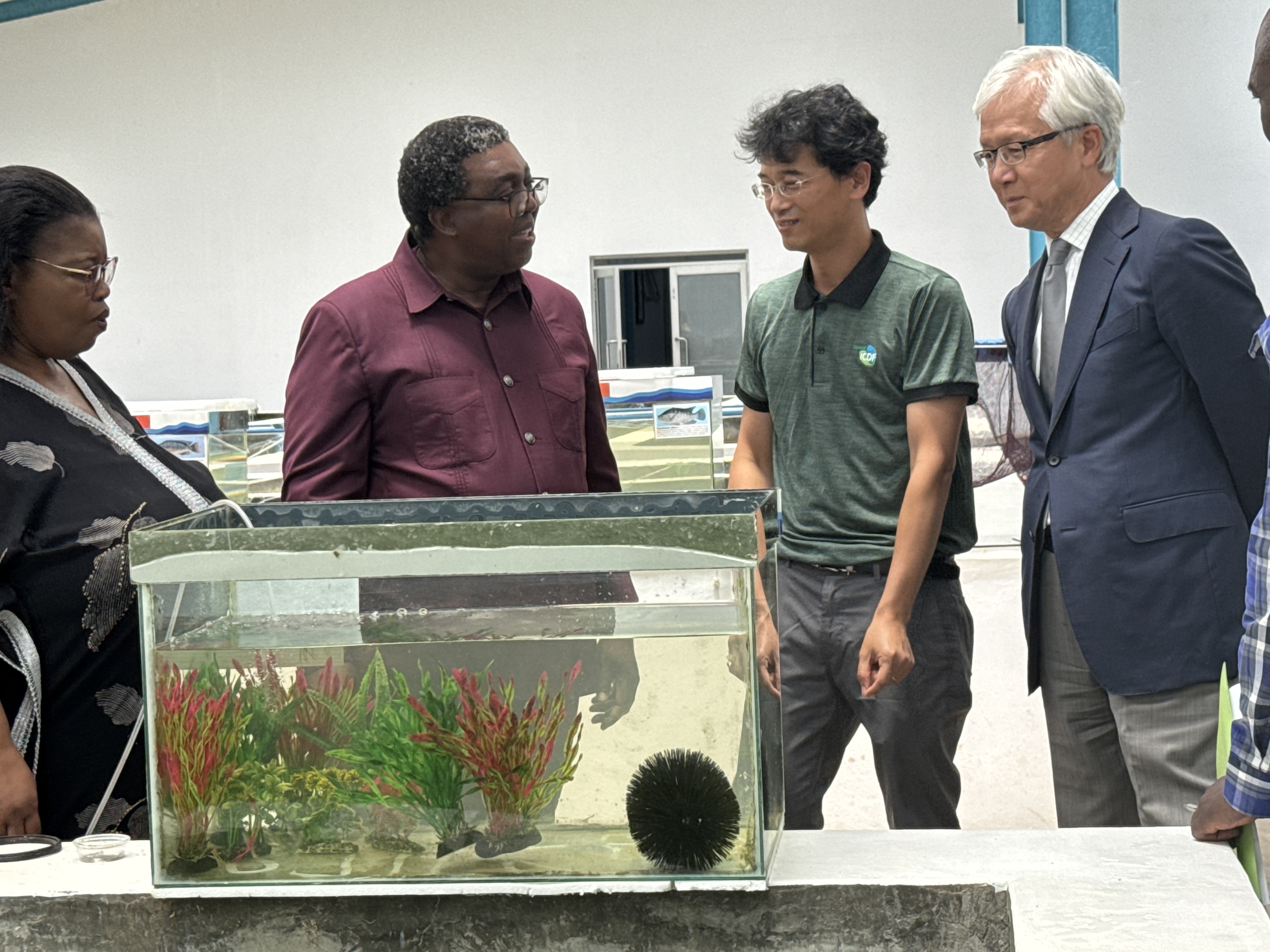
The Taiwan Technical Mission (TTM) in Eswatini on January 23 held the launch ceremony for the “Eswatini Aquaculture Project-Phase II” at the Malkerns Aquaculture Research and Production Center, marking a new stage in Taiwan-Eswatini agricultural cooperation. The event was attended by nearly 30 distinguished guests, including Eswatini Deputy Minister of Agriculture Mr. Sydney Simelane, Director of Extension Services Mrs. Nikiwe Dlamini, Director of Malkerns Agricultural Research Center Mr. Thembinkosi Gumedze, Minister-Counselor Chui Ching-lin from the Taiwan Embassy in Eswatini, and TTM Leader Mars Hsueh, demonstrating the mutual commitment of both sides to deepening agricultural and fisheries cooperation.
In his remarks, Deputy Minister Simelane pointed out that Eswatini’s beef industry has recently been affected by a foot-and-mouth disease outbreak, driving up meat prices and making fish an important alternative and healthy source of protein for the population. The Eswatini government will continue to work closely with the TaiwanICDF to ensure the stable development of aquaculture, he said, adding that additional personnel would be assigned to support the aquaculture center and expand outreach services nationwide to ensure the public has reliable access to an affordable source of protein.
Minister-Counselor Chui stated that Taiwan would continue working with Eswatini to ensure a stable supply of high-quality fish fry and provide necessary technical support and extension services. With the TTM’s long-term involvement, this project is helping to establish a commercial foundation for aquaculture while enhancing Eswatini’s food security and deepening bilateral cooperation.
TTM Project Manager Samuel Liu noted that Phase I successfully established the Aquaculture Research and Production Center, producing approximately 450,000 fish fry over four years, and laying a solid foundation for aquaculture development in Eswatini. Phase II will build on these achievements by expanding fish fry production and introducing smart agriculture technologies, including automated water quality monitoring systems in ponds that transmit real-time data to mobile devices and the center’s computers. Green energy applications will also be gradually implemented to comprehensively improve production efficiency and management capacity.
TaiwanICDF Deputy Secretary General Peifen Hsieh stated that the project has set up a revolving fund account, with future fish fry sales revenue being reinvested into the daily operations of the aquaculture center to strengthen financial autonomy. This aligns with Minister of Foreign Affairs Lin Chia-lung’s Diplomatic Allies Prosperity Project and comprehensive diplomacy initiatives, integrating technical cooperation with industrial development to help Eswatini enhance food security and achieve self-sustaining aquaculture development.
Related Pictures
- Update: 2026/02/12
- Hits:1096